
Seasonal programs.

Programs are built to reduce decision fatigue. They bundle compatible inputs so seasonal goals stay aligned from the root zone to the leaf surface.

01

Aeration recovery plan.
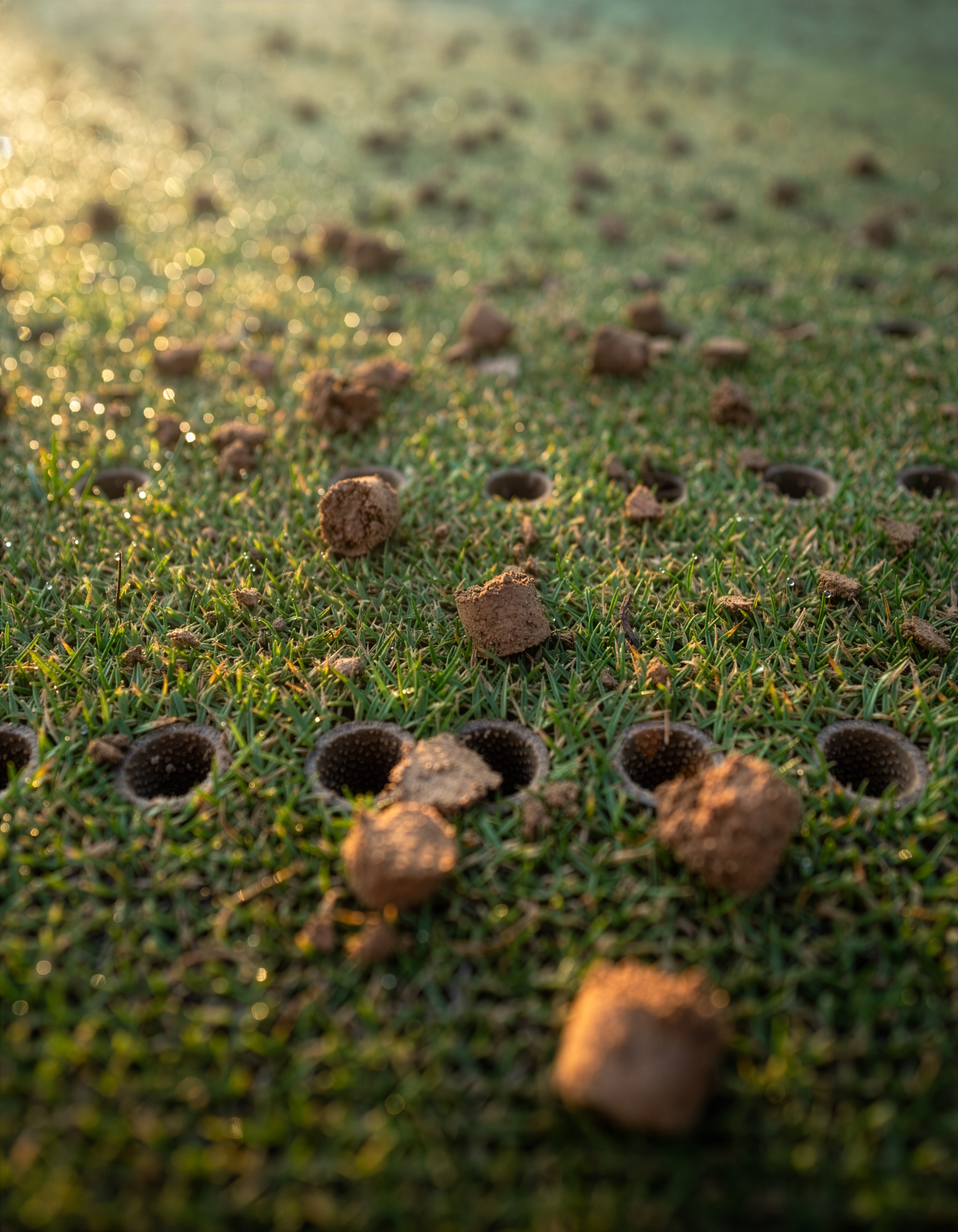
Aeration recovery plan.

The science

Aeration reduces thatch, increases gas exchange and relieves compaction. Heavy granular nitrogen is often applied just before or after to speed recovery.

The consequences

Surge growth from heavy nitrogen speeds recovery but increases thatch, reversing the purpose of aerating. It also slows greens and forces excessive mowing, opening turf to disease.

The solution

Foliar application 1–3 days before aeration loads the plant with a recovery package. Soil application at the same time releases tied-up nutrients and increases CO₂ evolution.

Recommended products C-Color-NC-Starter 3-18-18C-Energy-CalciumC-Strength-MicrosC-SoilsHumicPush-Hold+

02

Color builder plan.

Color builder plan.

The science

Nitrogen and iron get the credit for color, but magnesium, manganese, zinc and phosphorus are the missing links. Chlorophyll is a magnesium core surrounded by four nitrogen molecules.

The consequences

Off-color turf is sometimes desirable for firm, fast conditions. The cost is poor carbohydrate production and limited roots, leaving the surface exposed to disease and drought.

The solution

Regular applications of nitrogen and phosphorus with a balanced micronutrient package keep color and carbohydrate production linear, while still controlling firm, fast playing conditions.

Recommended products C-Color-NC-Starter 3-18-18C-Strength-MicrosGreen Glo Max L
03

Spring start-up plan.

Spring start-up plan.

The science

Cool soil temperatures work against soil and granular applications. Microbial activity is low and the conversions those products depend on simply do not run.

The consequences

Granular gives no immediate response, then too much response once soils hold above 60°F. Runoff and leaching turn into wasted cost and an environmental problem.

The solution

Foliar applications, one or two 7–14 days apart, once soil temperatures reach the upper 50s in the top two inches — usually late March or early April. Save the granular for late April.

Recommended products C-Color-NC-Starter 3-18-18C-Energy-CalciumC-Strength-Micros
04

Summer stress plan.

Summer stress plan.

The science

Root decline and disease pressure rise when respiration outpaces photosynthesis. Respiration burns carbohydrates; photosynthesis makes them. Every fertility plan should tilt that balance.

The consequences

When turf quality turns poor from root decline or disease, the plant has usually consumed more food than it made. There is no simple fix once it reaches that point.

The solution

Sugar-based raw materials act like an I.V. for turf, lowering respiration. Potassium lets the plant control its stomates and cool itself. Phosphites aid ATP production and protect against pythium.

Recommended products C-Color-NC-Starter 3-18-18C-Energy-CalciumC-Strength-MicrosPhosphite Blue
Request a Quote
Central Turf Agronomy

Request a quote.

Program guidance, custom timing or volume pricing. Or call 563-210-1616.

Product Catalog · 2026 Open in new tab